Al-'Afū (العفو) - the Painting and the Name
The story of a painting called What Remains

Al-'Afū is built from a root that means to erase so completely, no trace of the fault remains - and it is also one of God's Names.
The Name and Its Meaning
Al-'Afū comes from the root ع ف و - to erase, to wipe away so completely that no trace remains. It's close in meaning to pardon and forgiveness, but the root itself points to something more thorough than either. Al-Ghazali distinguishes the Name from its close relative, Al-Ghafur: "'all-forgiving' connotes concealment, while 'effacer' suggests erasing, and erasing is more effectual than concealment." He then turns to what the Name asks of us:
“Man’s share in this name should be clear: he is one who excuses [afw’] everyone who harms him, doing good for him instead, as he sees God the most high doing good in this world to the disobedient and the unbeliever rather than bringing them swiftly to punishment.”
Where It Appears
Al-'Afū appears twice in Surah An-Nisa, paired both times with another of God's Names, never standing on its own. In the first, it follows a verse about a wronged party's right to speak out - pardon offered only after the option to hold someone accountable is acknowledged, not instead of it. In the second, it follows a call to do good whether seen or hidden - pardon named alongside power, as something that could be withheld and isn't. Read together, the two verses frame Al-Afuw less as leniency and more as a choice made from strength: forgiveness, and the ability to enforce a claim, in the same breath.
فَأُولَـٰئِكَ عَسَى اللَّهُ أَن يَعْفُوَ عَنْهُمْ وَكَانَ اللَّهُ عَفُوًّا غَفُورًا
As for such, it may be that Allah will pardon them. Allah is ever Clement, Forgiving.
- Surah An-Nisa (4:99), Pickthall translation
إِن تُبْدُوا خَيْرًا أَوْ تُخْفُوهُ أَوْ تَعْفُوا عَن سُوءٍ فَإِنَّ اللَّهَ كَانَ عَفُوًّا قَدِيرًا
If you do good openly or in secret or pardon an evil, surely God is All-pardoning, All-powerful.
- Surah An-Nisa (4:149), Arberry translation
Reflecting on the Name
Olive trees are slow to change. They can carry the scars of drought, storm, or a hard pruning for decades, yet continue to bear fruit. It is as if the mark stays but stops mattering. Nothing about the tree goes to waste either: the fruit, the oil, even the wood, all of it used, all of it woven into my part of the world’s landscape and cuisine. The fruit and oil are greatly valued here for their health and healing properties as much as their taste. That felt close to what Al-'Afū asks of us: not concealment, but erasure - not to forget the wrong, but to let it go so completely it no longer shapes what comes after, and to keep giving anyway. What Remains came together as a quieter painting than the ones before it. The calligraphy almost disappears into the sky - one pass of it painted over until only a trace is left, the small figures in the corner unresolved. Most of what we carry is easier to release than to explain. Erasure, painted, looks less like an event and more like a landscape you eventually walk back into - what's left standing is what remains.
The Painting
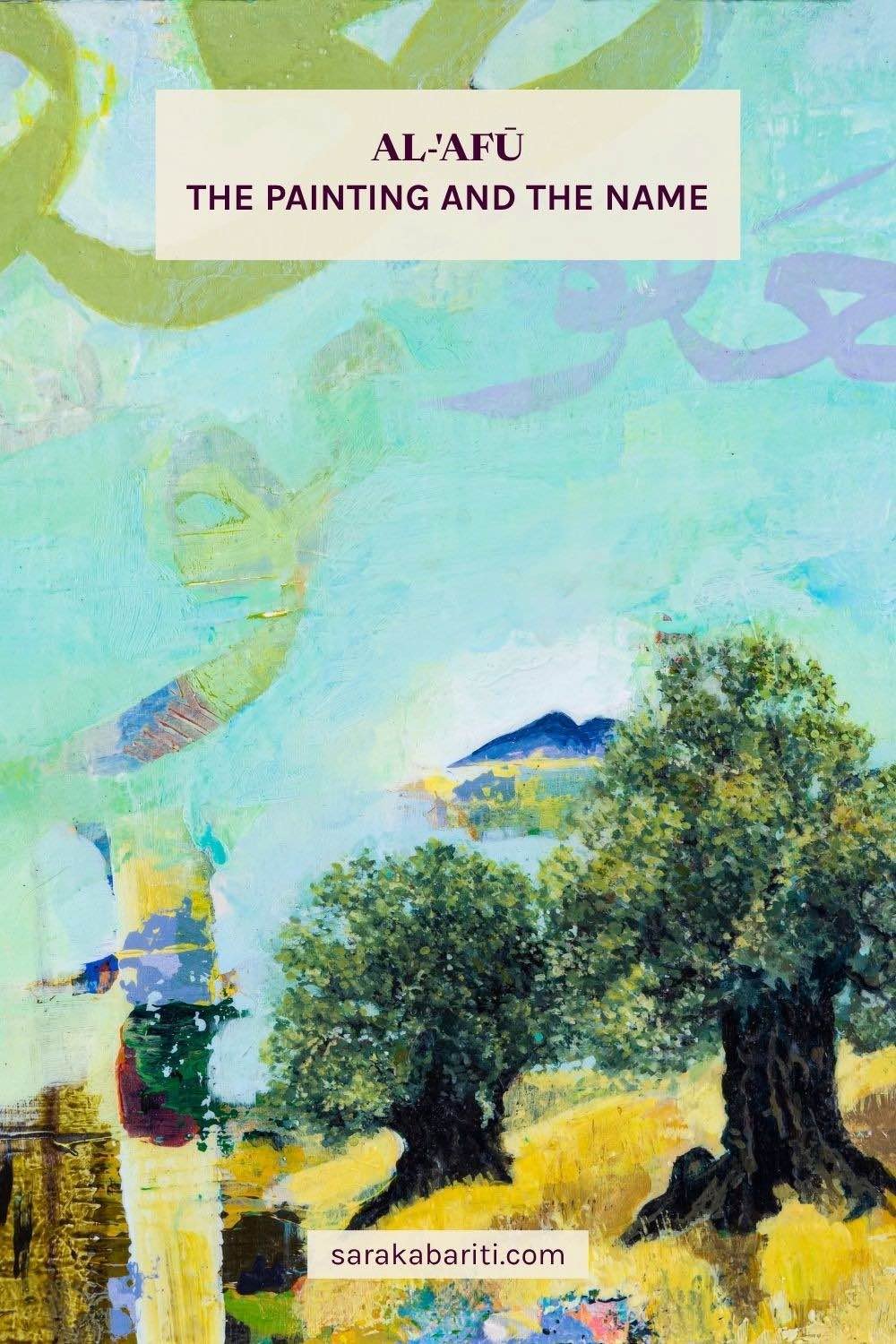
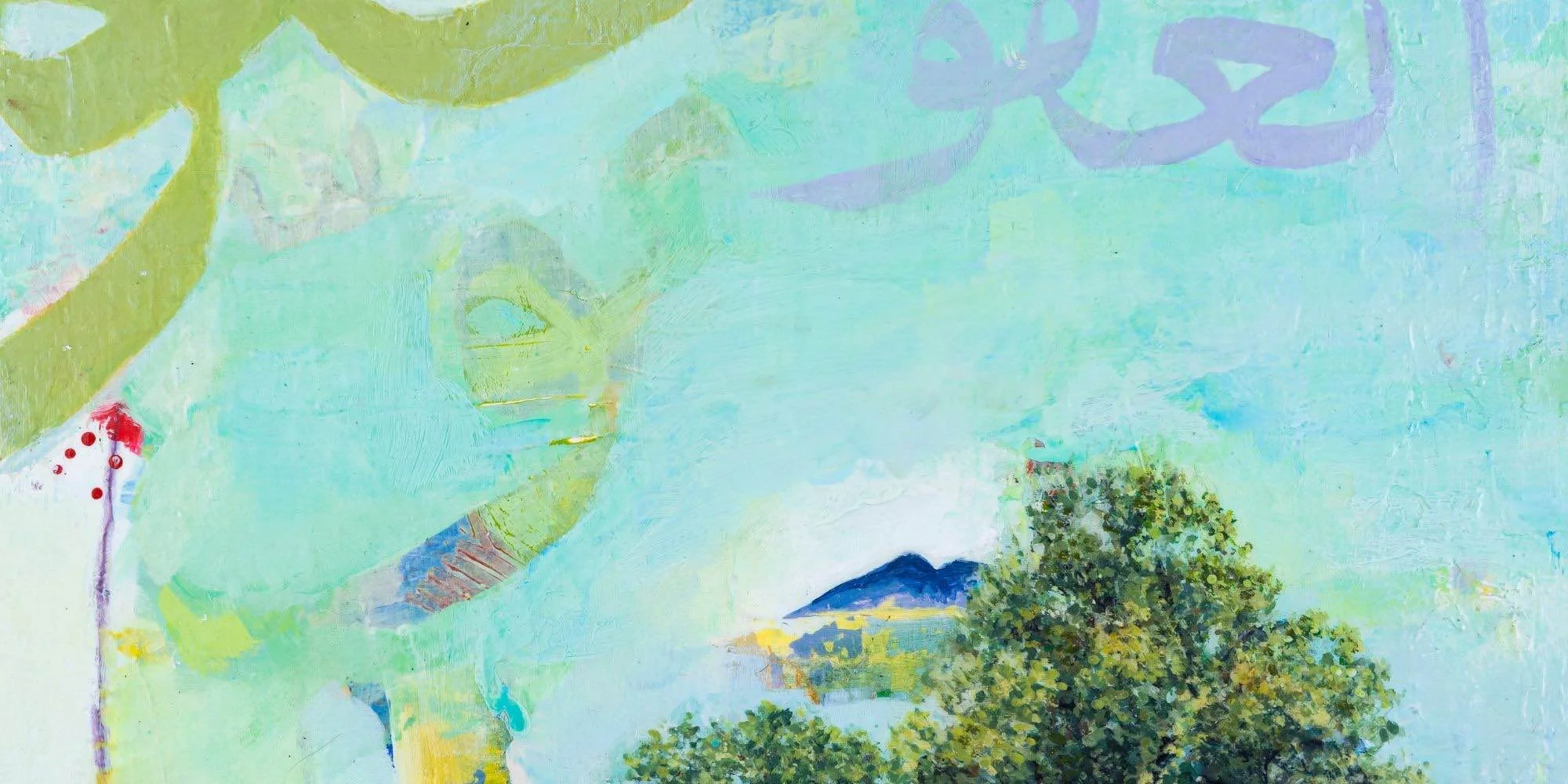
What Remains is acrylic on panel, painted in 2021. Al-'Afū's calligraphy appears three times: legibly in purple at the top right, again in a large sweeping pass of olive green across the upper left, and a third time layered beneath that green passage, mostly painted over - only part of the ف and a legible و remain visible. On the left, abstract vertical forms appear - one marked by a thin purple line and small red dots, another patched in blue, green, and red. In the bottom left corner, six small dark shapes suggest figures without resolving into any; they are left open to the viewer's own interpretation. Below, the abstract gives way to a naturalistic scene: two gnarled olive trees on a golden hillside, a hazy blue mountain in the distance, under a pale turquoise sky.
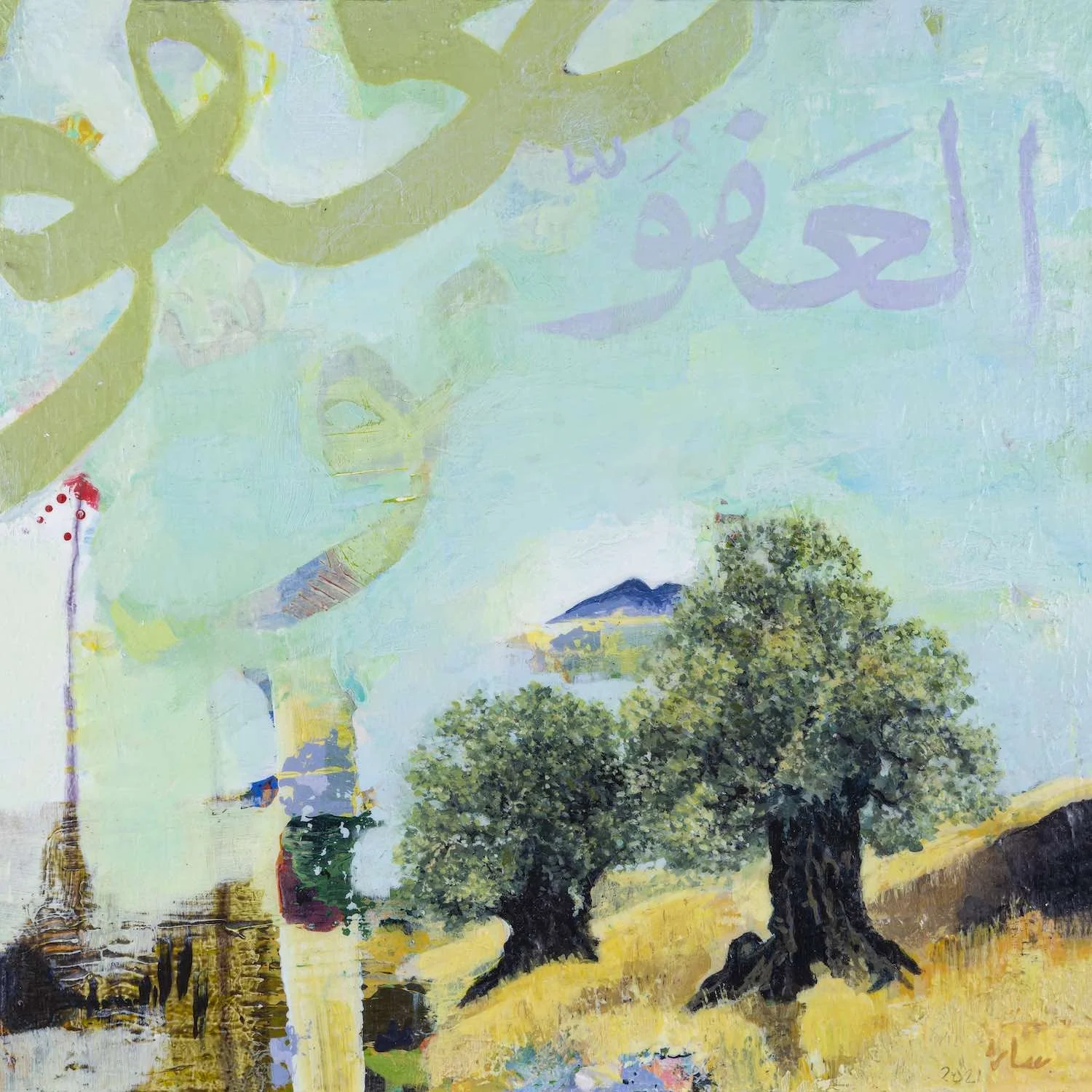
What Remains, 2021 - acrylic on panel
What Remains is available. If it resonates with you, you can see it along with the other artworks in the Hu Collection.
This is the fourth in a series on the Names and the words inside the paintings - the one on Al-Haqq is here.
From my studio in Amman - thank you for reading.